

A Prophecy about Jesus? (Zechariah 13:6)
Asher Chee |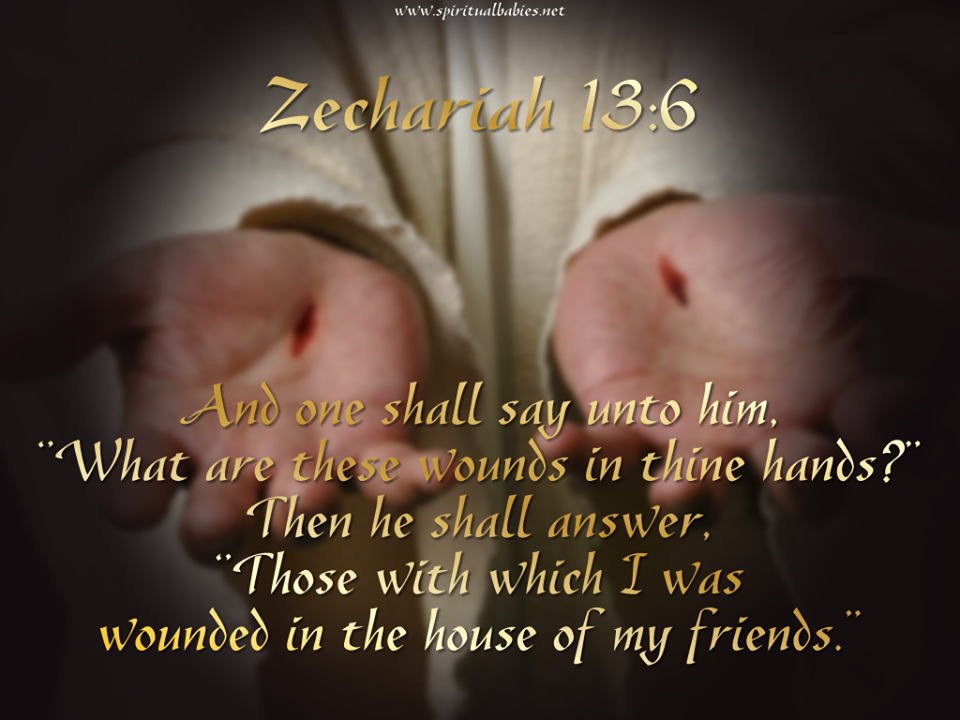
Zechariah 13:6 KJV And one shall say unto him, “What are these wounds in your hands?” Then he shall answer, “Those with which I was wounded in the house of my friends.”
Many Christians think that Zechariah 13:6 is a prophecy about Jesus’ crucifixion. If you were to ask them, “Who is being spoken of here?” They would tell say: “That is obviously a prophecy about Jesus Christ! The ‘wounds in [his] hands’ refer to the wounds which he received from the nails when he was crucified!”
This misunderstanding is primarily due to an error in translation. The Hebrew expression for “in your hands” in the KJV is bēyn yāḏeyḵā, which means “between your hands”—an idiom for the torso. Hence, this cannot be a reference to a crucifixion, let alone the crucifixion of Jesus Christ.
Moreover, Zechariah 13:6 belongs in context to the larger passage of Zechariah 13:1–6, and if we read it in its entirety, we would find that it cannot possibly be a messianic prophecy in the first place. Verses 1–2 set the scene of the passage as a prophecy about a time of national spiritual cleansing for Israel in the end times:
Zechariah 13:1–2 ESV “On that day there shall be a fountain opened for the house of David and the inhabitants of Jerusalem, to cleanse them from sin and uncleanness. And on that day, declares the LORD of hosts, I will cut off the names of the idols from the land, so that they shall be remembered no more. And also I will remove from the land the prophets and the spirit of uncleanness.
God promises that he will cleanse Israel by ridding them of their false gods and false prophets. Verses 3–6 relate the experience of a hypothetical false prophet:
Zechariah 13:3–6 ESV And if anyone again prophesies, his father and mother who bore him will say to him, ‘You shall not live, for you speak lies in the name of the LORD.’ And his father and mother who bore him shall pierce him through when he prophesies. On that day every prophet will be ashamed of his vision when he prophesies. He will not put on a hairy cloak in order to deceive, but he will say, ‘I am no prophet; I am a worker of the soil, for a man sold me in my youth.’ And if one asks him, ‘What are these wounds on your back?’ he will say, ‘The wounds I received in the house of my friends.’”
During that time of national cleansing, false prophecy would be so easily identified that even the false prophet’s own parents would personally “pierce him through.”
Therefore, in context, the “him” in verse 6, who has “wounds” which he had “received in the house of his friends”, clearly refers to the hypothetical false prophet, and not Jesus Christ.