

The Weakness of Strong’s Concordance
Asher Chee |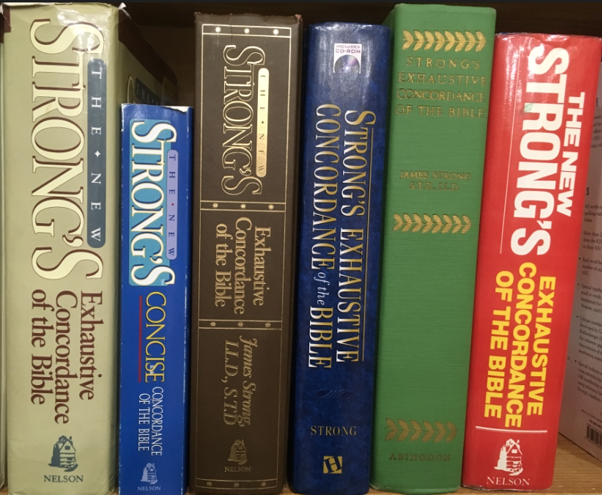
Strong’s Concordance is often used as if it were a dictionary, to find out the meaning of a word in the biblical languages (Hebrew, Aramaic, and Greek). However, Strong’s Concordance has one critical weakness: it does not accurately represent the realities of the biblical languages.
Strong’s Dictionary
When people use the term “Strong’s Concordance”, they usually refer to the dictionary at the back of a physical copy of Strong’s Concordance. This dictionary (Strong’s Dictionary) supposedly lists all the meanings of a Hebrew, Aramaic, or Greek word. For example, the entry for the Hebrew word ḥāṭāʾ (חָטָא) reads:
2398. חָטָא châṭâʼ, khaw-taw'; a prim. root; prop. to miss; hence (fig. and gen.) to sin; by inf. to forfeit, lack, expiate, repent, (causat.) lead astray, condemn:—bear the blame, cleanse, commit (sin), by fault, harm he hath done, loss, miss, (make) offend (-er), offer for sin, purge, purify (self), make reconciliation, (cause, make) sin (-ful, -ness), trespass.
If a person reads this entry, he might think that this Hebrew word always has all these meanings whenever it is used. He might say, “Wow, this Hebrew word is so rich! It has so much meaning packed into it!”
However, this does not make sense. How can a word mean “to sin” and “to repent” at the same time? Of course it does not. In reality, the meaning of a Hebrew word depends on several factors. However, critical information about these factors are not provided in the dictionary of Strong’s Concordance.
Basics of Hebrew Verbs and Roots
Every Hebrew verb comes from a root. Multiple verbs can come from the same root. The word ḥāṭāʾ is only one of the verbs that come from the root ḥṭʾ (חטא). These are all the known verbs that come from the root ḥṭʾ:
- ḥāṭāʾ (חָטָא), meaning “to commit sin”;
- ḥiṭṭēʾ (חִטֵּא), meaning “to cleanse from sin”;
- heḥĕṭṭiyʾ (הֶחֱטִּיא), meaning “to cause to sin”; and
- hiṯḥaṭṭēʾ (הִתְחַטֵּא), meaning “to cleanse oneself from sin”.
All these verbs come from the same root, ḥṭʾ. Yet, they are all different verbs, and each verb has a different set of meanings from one another!
However, this reality about Hebrew verbs is not reflected in Strong’s Concordance. Rather, Strong’s Concordance confuses all these verbs together and treats them as though they were the same word. If a person relies on Strong’s Concordance, then he would be misinformed about this reality of the Hebrew language.
Using the Concordance
This weakness of Strong’s Dictionary affects the actual Strong’s Concordance. For example, in Strong’s Concordance, one of the verses listed for the word ḥāṭāʾ is Psalm 51:7:
Purge me with hyssop, and I shall be clean; wash me, and I shall be whiter than snow. (ESV)
According to Strong’s Concordance, the Hebrew word for “purge” here is ḥāṭāʾ. As seen earlier, according to Strong’s Dictionary, the word ḥāṭāʾ means “to sin”. So then, was the writer telling God, “Sin against me with hyssop!”? Of course not.
In reality, the word for “purge” here is the verb ḥiṭṭēʾ, and not ḥāṭāʾ. Hence, it means “to cleanse from sin”, and not “to commit sin”. However, this important detail is not available to the user of Strong’s Concordance.
Proper Dictionaries
Because of how Strong’s Concordance wrongly represents the biblical languages, many of its users are misinformed about how the biblical languages really work. For learning the meaning of biblical language words, proper dictionaries should be used instead.
Here are two good dictionaries that are available for free:
- Brown–Driver–Briggs Lexicon (Hebrew & Aramaic)
- Thayer’s Lexicon (Greek)
For those who can afford it, here are the best and standard dictionaries that are used in scholarly research: